

The big picture
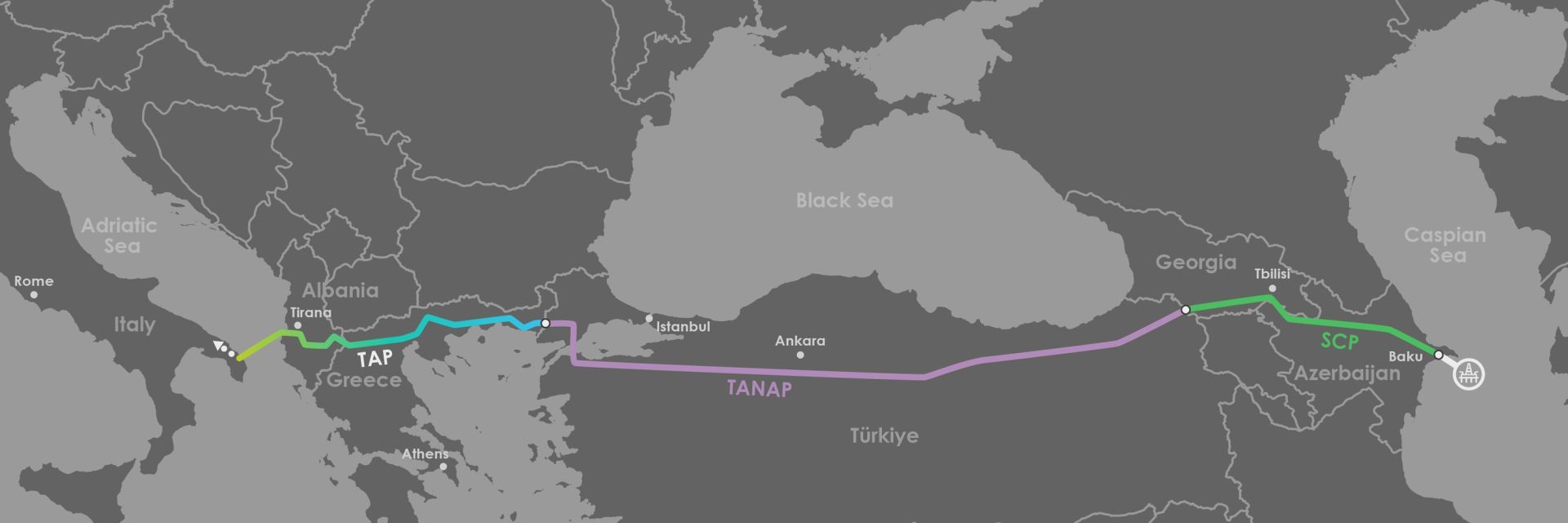
As a key part of the Southern Gas Corridor (SGC), the Trans Adriatic Pipeline is strategically important to Europe and essential in providing reliable access to a new source of natural gas, while supporting the EU’s energy transition objectives.
An increasing demand for energy
The natural gas resources in the Caspian region present an enormous opportunity for Europe to meet its energy challenges. Natural gas is expected to play an increasingly important role in the European energy mix for decades to come. It offers an accessible, affordable and low carbon option compared to traditional fossil fuels, such as coal and oil. The reliability and flexibility of natural gas make it the ideal partner to renewable energy sources.
Security of supply
TAP provides a much-needed new source of natural gas for Europe. The pipeline helps meet the needs of businesses and consumers by giving them both choice and security of supply.
TAP also helps to promote the development of gas sectors in its host countries.
Committed to the energy transition
Europe's energy transition requires a secure, reliable and resilient energy system. Alongside its contribution to energy security and supply diversification, TAP is preparing its infrastructure for future energy needs, including the potential transport of low-carbon gases, such as hydrogen and biomethane.
TAP is also working to reduce the environmental footprint of its own operations through a structured programme of decarbonisation initiatives. This includes reducing greenhouse gas emissions, improving energy efficiency and strengthening emissions monitoring and reporting.
By 2025, TAP had reduced total greenhouse gas emissions by more than 25% compared to forecast levels, methane emissions by over 50%, and fugitive emissions by more than 85% compared to the baseline. Building on these results, the Company has launched a new Carbon Management Plan for 2026–2030, focused on further emissions reductions and operational efficiency improvements.
Benefits to host countries
TAP provides strategic and economic benefits to the three host countries through which the pipeline passes: Greece, Albania and Italy.
The host countries now enjoy enhanced status on the European energy map as regional energy gateways and hubs. The pipeline provides a new gas infrastructure that will be a long-term, sustainable asset to these countries – offering an unprecedented level of security in relation to energy supply and a much-needed stimulus for economic development.
The construction of the pipeline encouraged considerable foreign investments for the host countries and this is expected to continue over the lifetime of the pipeline.
TAP provides many other economic benefits to the host countries, including:
- direct contribution to Gross Domestic Product (GDP) through taxes
- direct and indirect employment opportunities
- procurement of goods and services throughout the supply chain
- social and environmental investments through community programmes.
Regional connectivity
The pipeline creates opportunities for gas transportation to markets in the wider region through existing and potentially new infrastructure.
TAP is connected to the Interconnector Greece-Bulgaria (IGB), which entered into commercial operations in 2022, enabling the transportation of Caspian gas to Bulgaria.