This website uses cookies to ensure site functionality (functional cookies). Additionally, as long as you provide your consent here, this website will also be using cookies in order to:
personalize content and ads;
provide social media features and to analyse our traffic (marketing cookies);
share information about how you use our site with our web analytics and social media partners, who can combine it with other information you have provided to them or that they have collected from your use of the service (analytical cookies).
By clicking on "Manage preferences" you can see the options and manage your preferences and by clicking "Save preferences" you save your cookies preferences. By clicking on the button "Approve all cookies", all cookies will be accepted. By clicking on the button "Reject analytical - and marketing cookies" only functional cookies will be accepted. Our cookies privacy notice can be found here
By approving all cookies you will also be providing your consent for using analytical and marketing cookies.
By rejecting these cookies it means that your visit will not be measured in our statitics and that Vimeo videos and YouTube videos cannot be played.
Trans Adriatic Pipeline is committed to biodiversity conservation. Our goal is to restore, and where possible enhance, biodiversity levels along the pipeline route.
Before construction of the pipeline, TAP developed and implemented a robust biodiversity management framework to promote the avoidance of biodiversity impacts. Our biodiversity management system identified sensitive biodiversity features and designed mitigation and monitoring requirements specific to each feature, within an overall mitigation hierarchy.
Where avoidance was not possible, we implemented additional measures to minimise, mitigate or offset any potentially adverse impacts.
TAP engaged international and local experts to carry out detailed environmental and social baseline surveys to support the Environmental and Social Impact Assessments (ESIAs) undertaken in the three host countries.
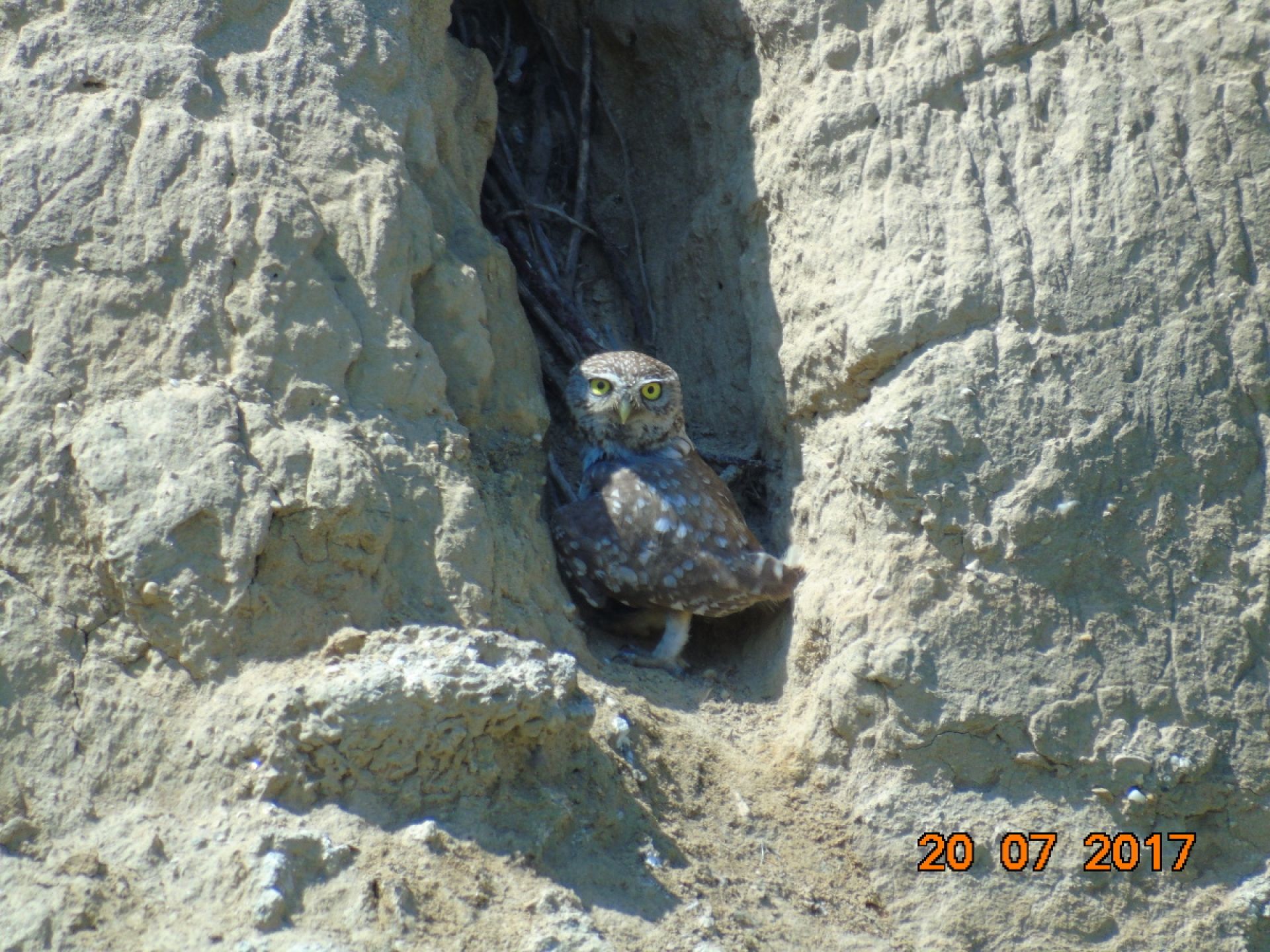
Species TAP protected during the construction phase.
Detailed studies
Our teams conducted studies to fulfill the commitments made in the ESIAs and TAP governance, such as surveys to confirm distribution of endemic fish species in watercourses along the pipeline route. Offshore surveys in Italian and Albanian waters provided further information on marine habitats.
Other studies were conducted to provide supplementary data to update and enrich the ESIA data, or to fill gaps identified in the existing baseline. For example, we conducted surveys at the appropriate time of year to confirm potential seasonal or spatial sensitivities.
Where additional sensitivities were identified, TAP adopted the enhanced mitigation measures proposed by the species experts’ undertaking the studies. These measures included refining construction techniques and schedules to minimise impact to sensitive species.
TAP applied a rigorous process to select the pipeline route aimed at ensuring that, wherever possible, biodiversity sensitive areas were avoided.
The construction teams achieved this by routing around areas of high biodiversity value or tunneling under sensitive features, such as rivers and wetlands.
For example:
In Albania, trenchless water crossings were carried out at ten watercourses in order to avoid impacting the European otter population in the Osumi River. The success of this avoidance strategy is evidenced by the continued presence of the otter population at all crossings.
The riparian corridor of the Aliakmonas River in Greece was identified as an important habitat for large carnivores, aquatic species and sensitive riparian habitats. Construction using a trenchless technique allowed all direct impacts to natural habitats to be avoided. Following construction, there continues to be a large carnivore presence all along the river, highlighting the success of this avoidance strategy.
In Italy, our teams tunnelled under important habitats such as wetlands and oak forests to avoid impacts.
TAP will continue to monitor these areas throughout the pipeline’s lifetime.
Where some impact could not be avoided, efforts have been made to minimise them through mitigation strategies. These have included enforcing seasonal work restrictions to reduce the impact on the lifecycle of certain fauna, reducing the working width to the minimum area possible in identified natural habitats, or translocating or monitoring sensitive flora to ensure that work activities did not adversely affect them.
For example:
In Albania, seasonal work restrictions were implemented during the Golden Jackal breeding season. Post-construction surveys show that the population continues to thrive in those areas.
Prior to construction, the rare Albanian lily was identified in an area close to planned works. These plants were monitored throughout the construction phase to ensure no indirect impact.
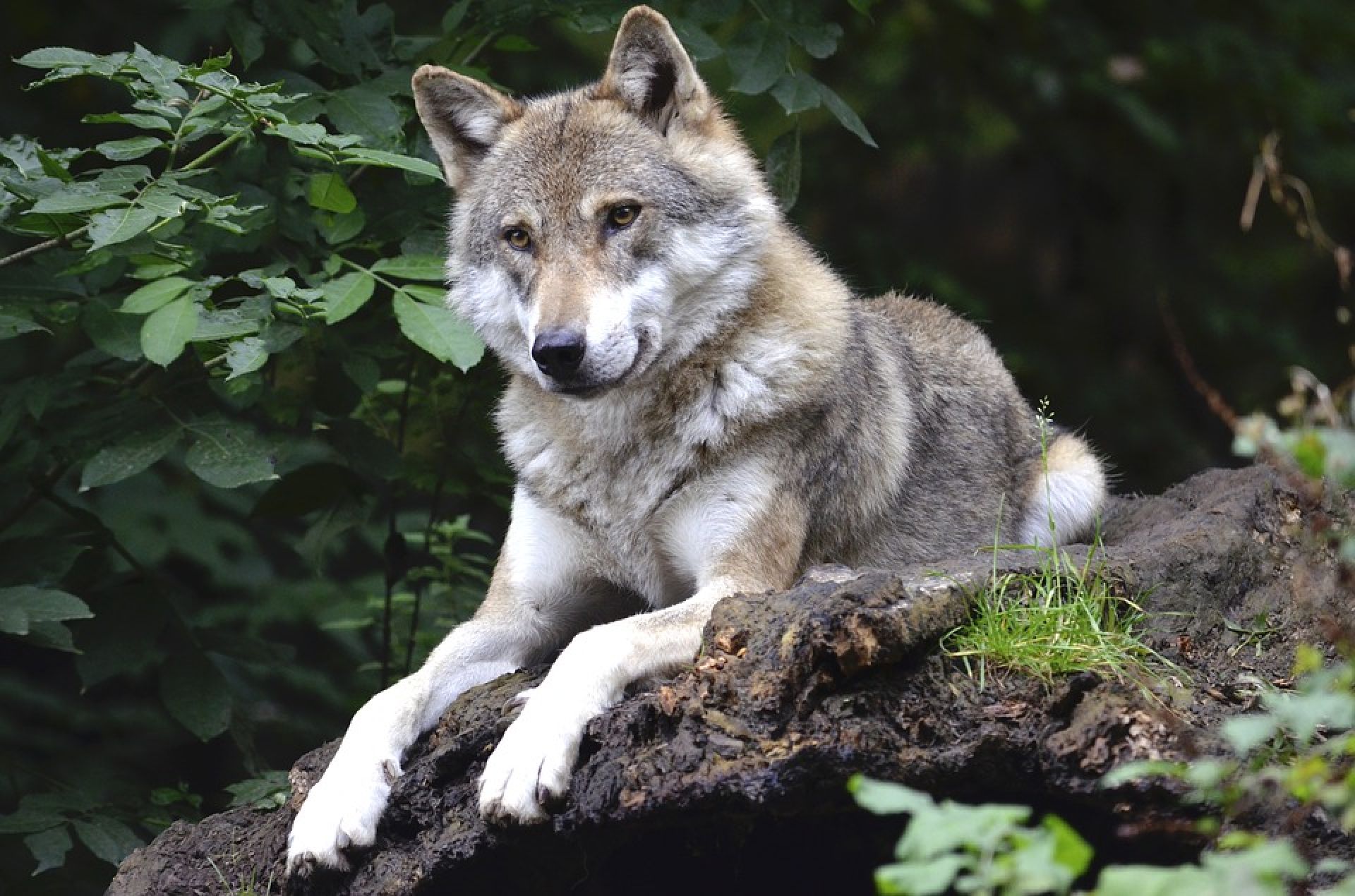
TAP implemented seasonal work restrictions in various areas in Greece during the wolf and brown bear breeding seasons. Post-construction surveys have shown that the populations of these large carnivores continue to thrive in these areas.
Seeds from three endemic plants in Greece were harvested and stored in laboratory conditions. They will be used to restore the population to pre-construction levels if impacts are identified during the pipeline’s lifetime.
TAP is committed to re-establishing vegetation along the pipeline right of way as closely and quickly as possible to its original condition, composition and density. The only exception to this is along the restricted ownership zone, where deep-rooted trees cannot be planted for safety and operational reasons. See more information on the Safety near the pipeline page.
Reforestation will occur for forest(s) that existed on the pipeline right of way before construction. TAP is committed to successfully replacing every tree felled during construction. However, not all trees will be replaced in the same location from which they were removed due to the restrictions in the restricted ownership zone.
All re-vegetation processes are regularly monitored and progress is assessed against a set of pre-agreed targets. These include tangible evidence that TAP’s environmental and social commitments and mitigation measures are being fulfilled. Restoration of vegetation to a similar density and diversity to that of pre-construction will also be monitored.
All reforestation works were agreed to and are monitored by the competent forest authorities. TAP’s long-term bio-restoration monitoring programme will follow the success of our actions over the course of the pipeline’s lifetime to ensure no net losses to biodiversity.
For example:
In Albania, over 250 000 trees will be replanted on the reinstated pipeline and at off-site locations to ensure that there is no reduction to forested areas. Black pine saplings have been grown from local seed and specialised contractors employed for reforestation activities.
Over 700,000 trees and plants will be replanted at locations in Greece to ensure there is no reduction to forested areas. In the Loutros forest, pine saplings have been carefully planted by specialised contractors under certain procedures.
Due to the successful implementation of the mitigation hierarchy, no natural forest habitats have been impacted in Italy, due in part to the use of trenchless techniques.
In some cases, impacts have been unavoidable. In these instances, TAP is using biodiversity offsets to compensate for any loss in biodiversity value.
An offset strategy has been developed to address any residual impacts on biodiversity, focusing on species and habitats identified as priority biodiversity features or critical habitat. Biodiversity offsets will be implemented in the years to come and monitored over the pipeline’s lifetime to ensure TAP achieves its commitment of no net losses to biodiversity.