
TAP Starts Seman River Crossing Using State-of-the-Art Technology
TAP began the complex works for crossing an approx. 1.1km stretch in the Albanian region of Fier, which hosts the Seman river, a railway as well as a road.
In November 2016, Trans Adriatic Pipeline (TAP) began the complex works for crossing an approximately 1.1km stretch in the Albanian region of Fier, which hosts the Seman river, a railway as well as a road. Using a modern technology called horizontal directional drilling (HDD), the team avoided trenching, reduced excavation works to a minimum and limited impact on ecosystems. All in all, another first for Albania.
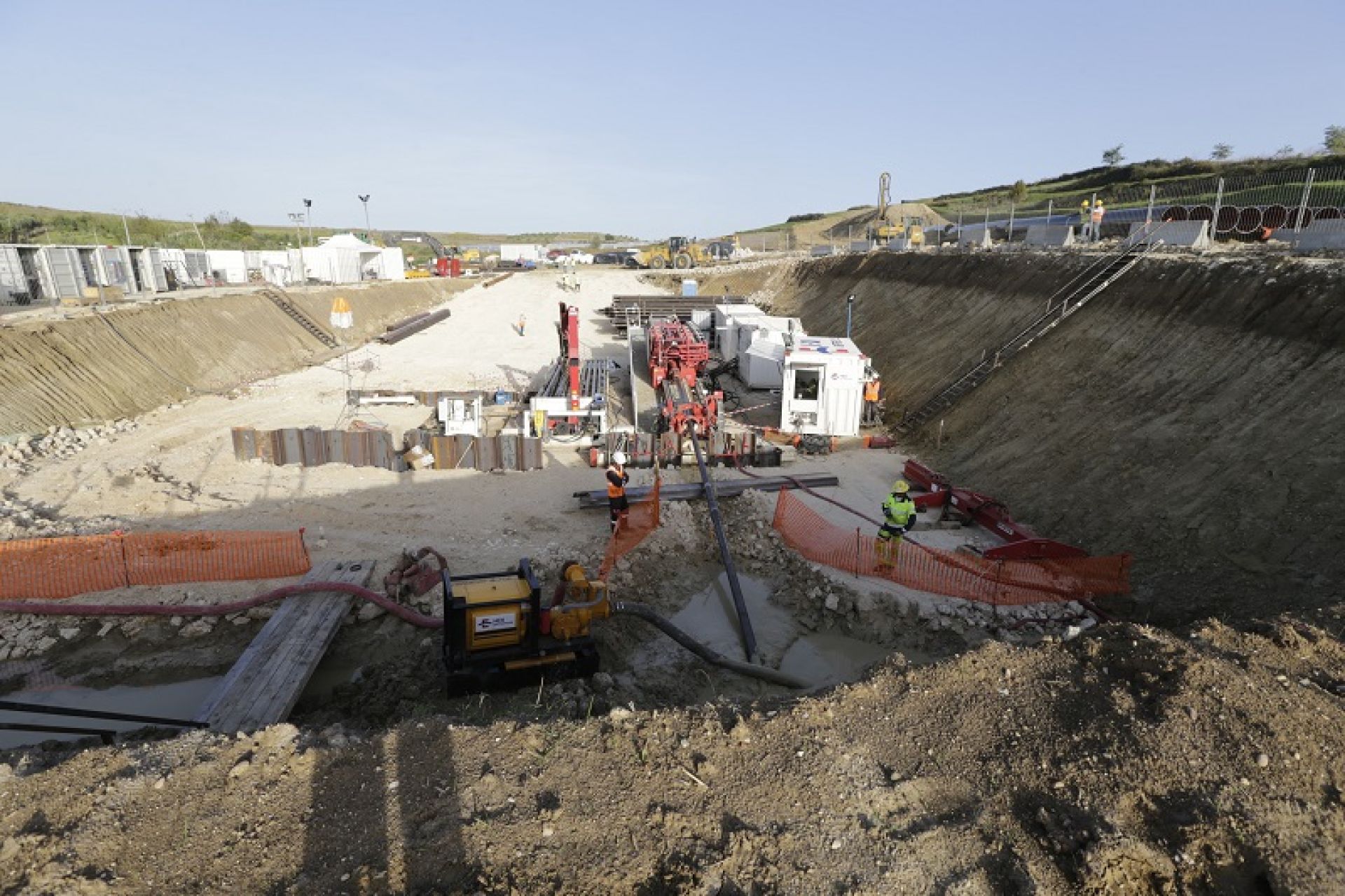


Works for the insertion of the pipeline under the Seman river bed take place a few hundred metres from each end of the trenchless crossing. The HDD process uses a drilling rig in a progressive sequence, reaching a depth of nearly 26 metres under the river bed. Eventually, the pipe is pulled through the completed borehole (a more detailed description of HDD steps is available below).
“TAP crosses 555 roads, 514 rivers and one railway in Albania alone and we pay special engineering attention to each crossing. After careful consideration, we have decided to use horizontal directional drilling under two crossings of the Seman river as this modern technology avoids impact on the physical river as well as on the environment. TAP will continue to apply the highest industry standards and best practice, working safely and with care for the environment, cultural heritage and the communities along the pipeline route,” said Karl Roberts, TAP Project Manager for Albania.
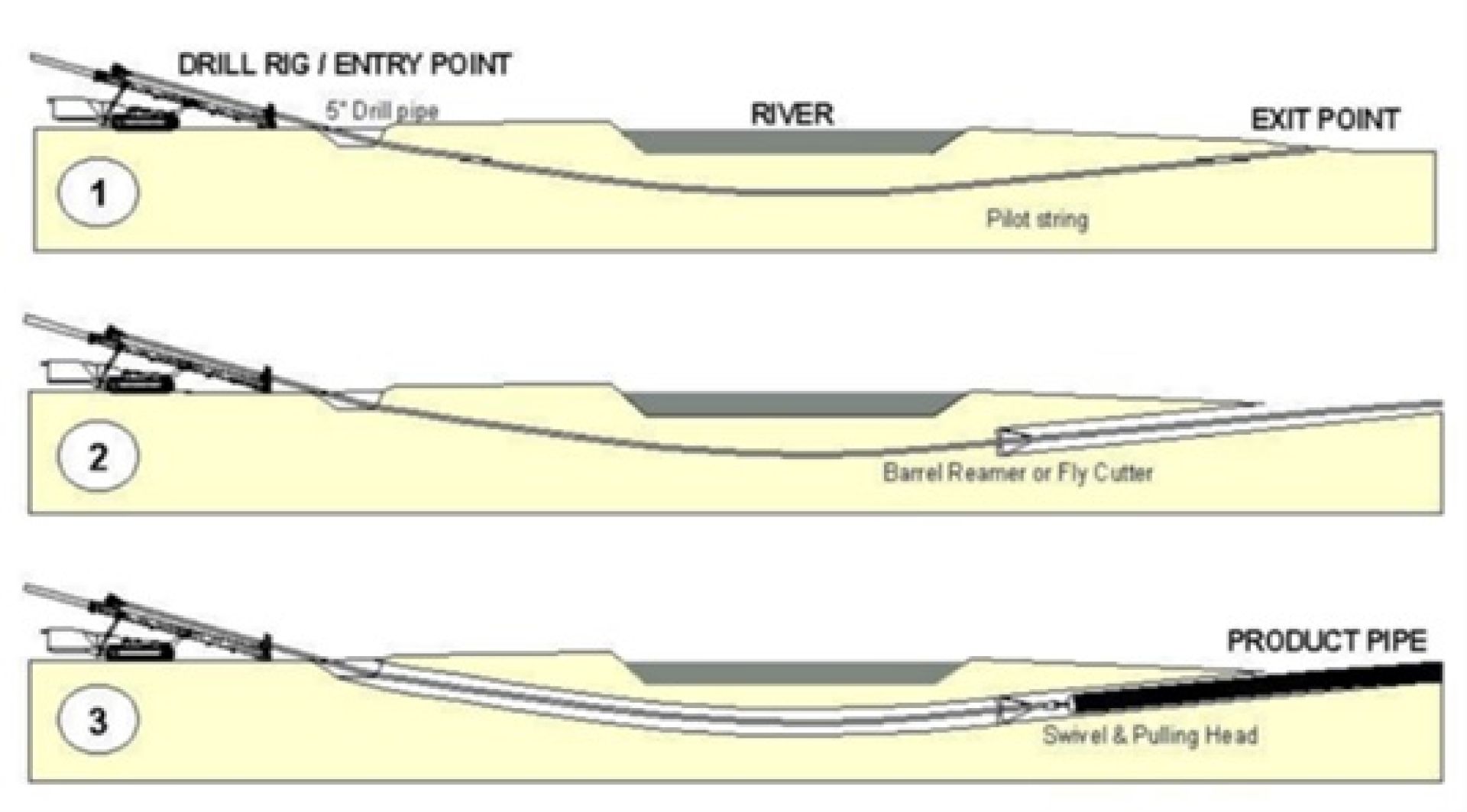
HDD steps:
- Pilot Hole. A pilot hole is drilled from the entry pit to an exit pit by a drilling rig. The penetration angles on either side of the installation should be around 6 degrees. A control positioning system assures that azimuth, inclination of the hole and rotational position of the drill follow the engineered alignment.
- Reaming. The hole is then enlarged by passing larger tools that depend on the size of the pipe to be pulled back through the borehole.
- Pull in. Once the borehole is opened up to a diameter of 62”, the pull-in process can start and the pipeline can to be pull back through the borehole, from the exit point, by the drilling pipes. The 48” pipe pulled through is filled with water but has a correctly sized buoyancy pipe inserted into the pipe that is full of air. This carefully calculated buoyancy control reduces the friction between the 48” steel pipe and the 62” borehole as the pre-welded and tested 48” pipe string is being pulled through the borehole.