
TAP Teams Recover 2,600-year-old Offshore Artefacts
22 Ancient Greek Artefacts Lifted from the Bottom of the Adriatic Sea Using Cutting-edge Technology

Melendugno, Italy. Using remotely operated equipment, Trans Adriatic Pipeline (TAP) specialised teams have safely recovered 22 objects of extraordinary archaeological importance from almost 800 meters below sea level, in the Otranto canal of the Adriatic Sea, near the pipeline’s offshore route.
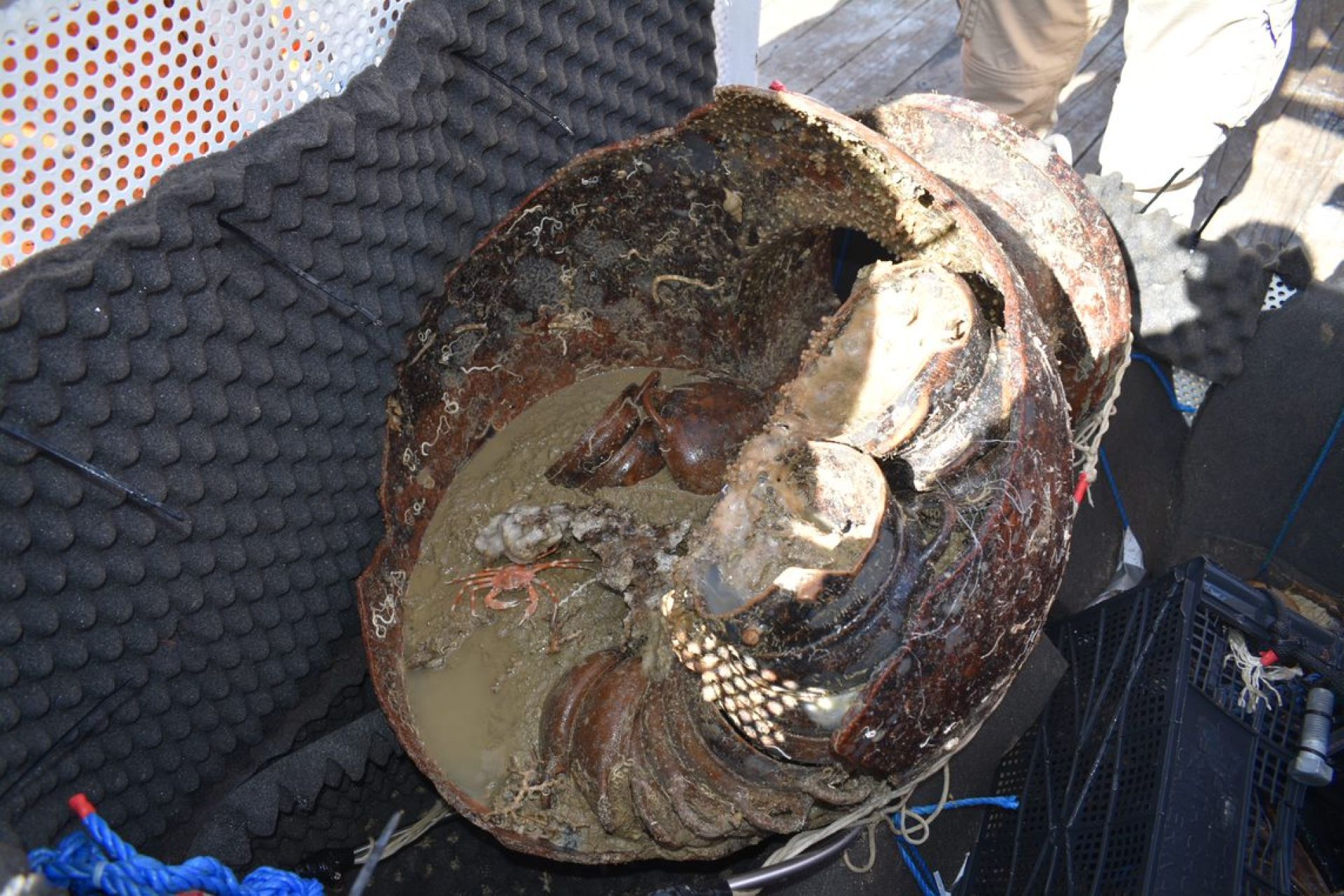
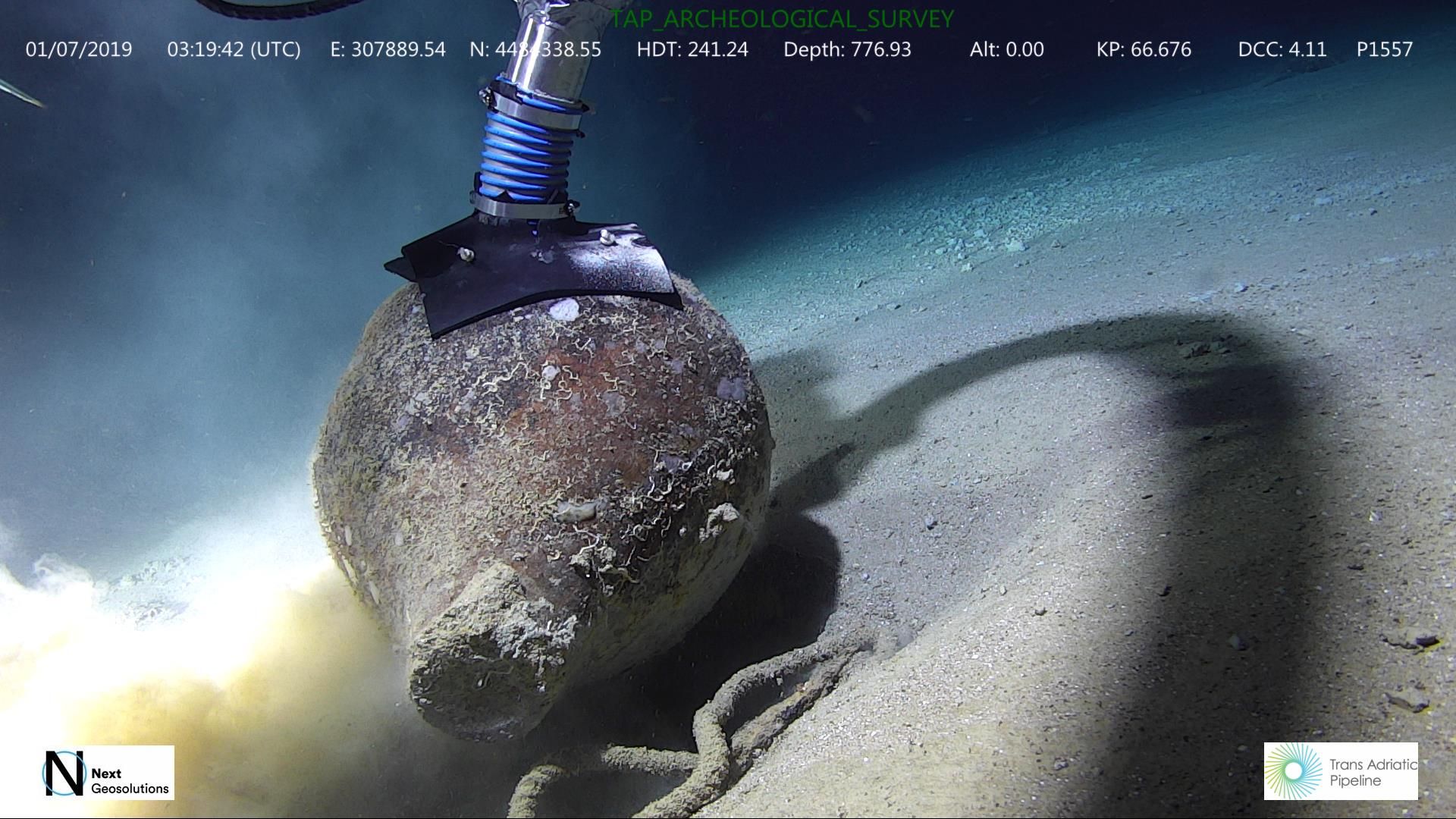
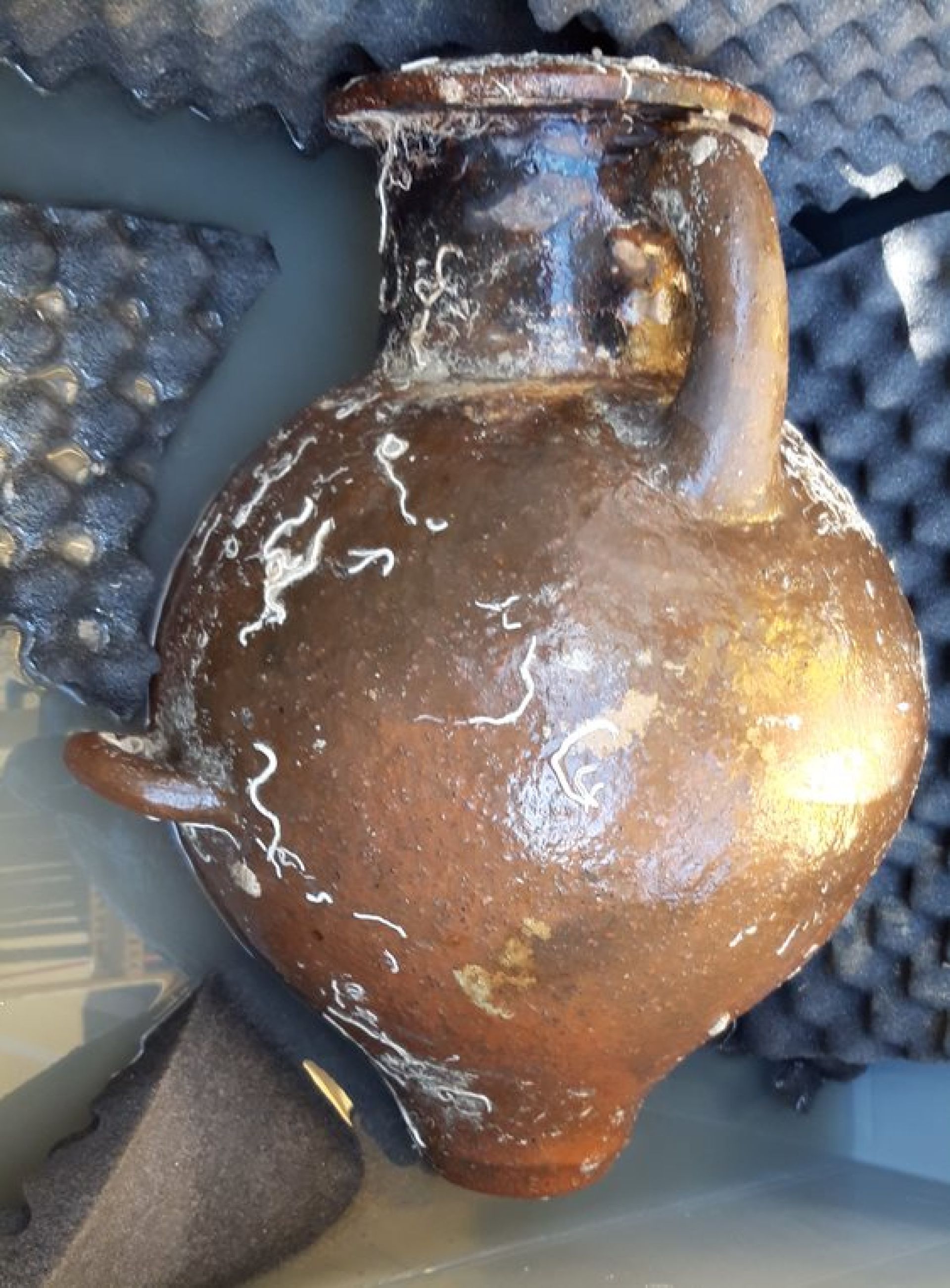
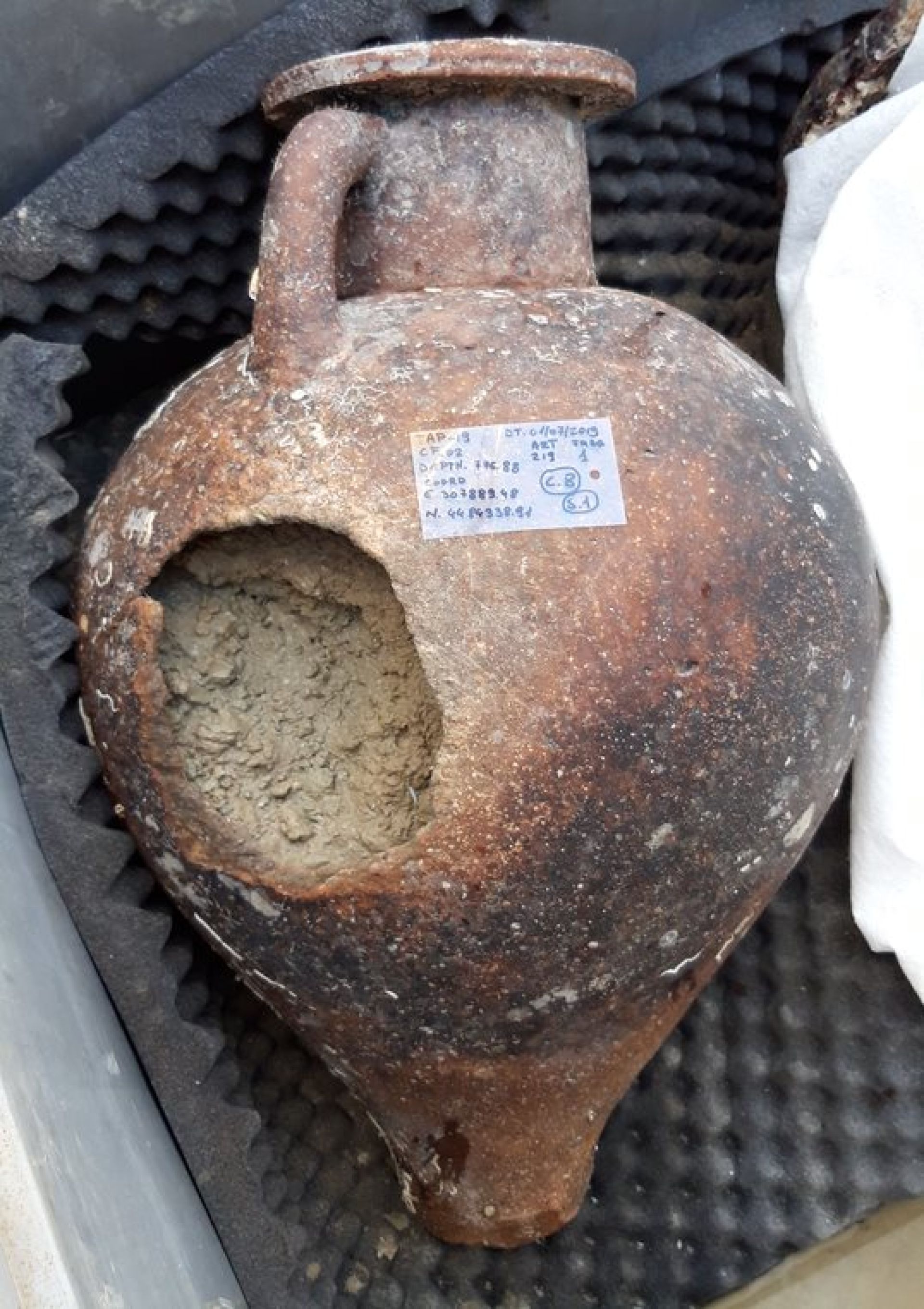
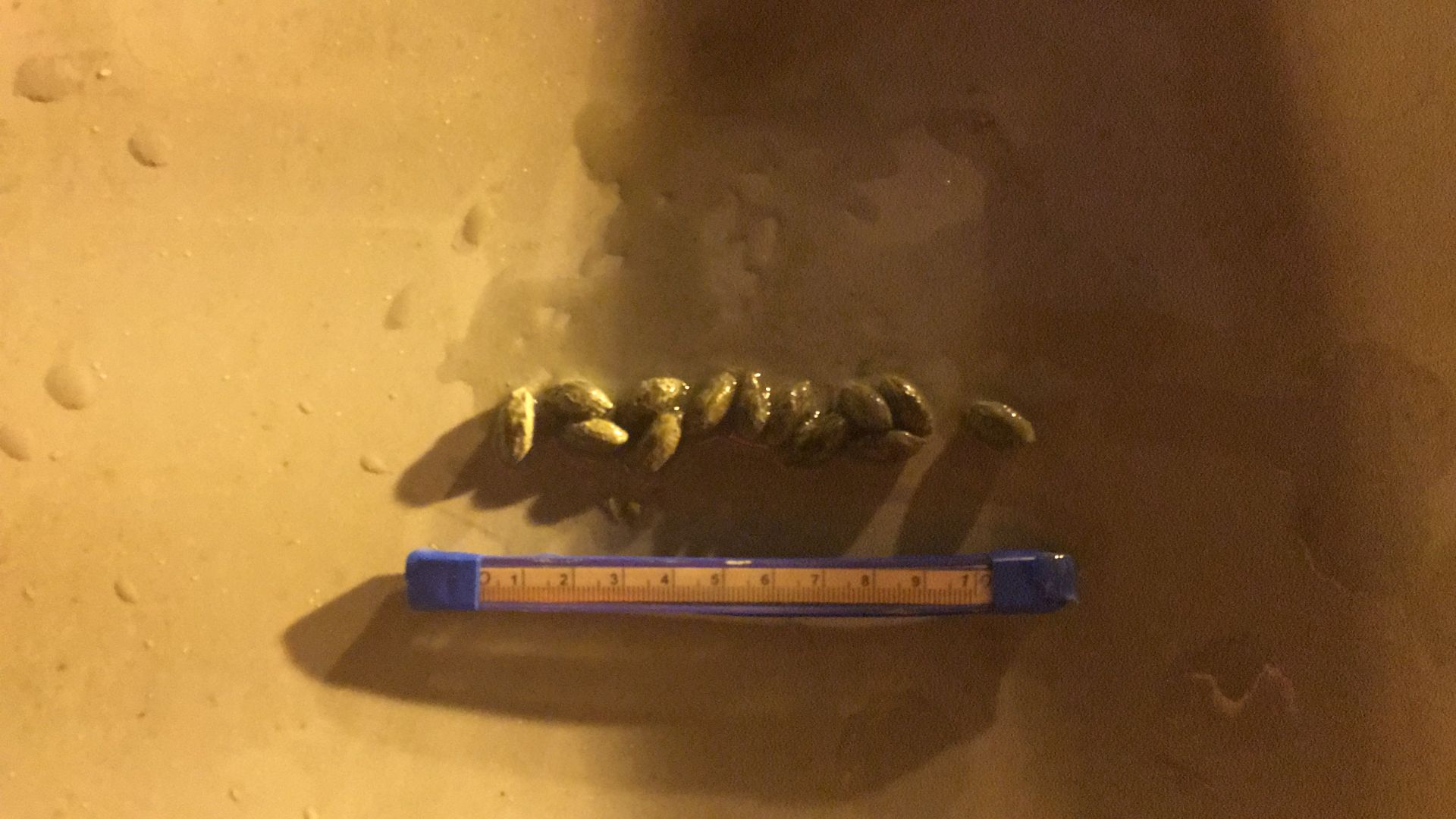


The artefacts – including several types of ancient jars (3 amphorae, 4 hydriai, 4 trefoil jugs, 1 pithos), a set of cups and olive seeds – belong to one of the few Greek-archaic shipwrecks identified to date in Mediterranean waters and the first in the Adriatic Sea.
The preliminary analysis of the site and artefacts dates the objects to the second half of the 7th century BC, providing invaluable insight into trans-maritime trade during the first millennium. The finds have been managed with and delivered to the relevant authorities, namely the newly established National Superintendency of Underwater Cultural Heritage, with whom TAP is actively cooperating to further investigate, study and restore the recovered artefacts.
A short trip down memory lane
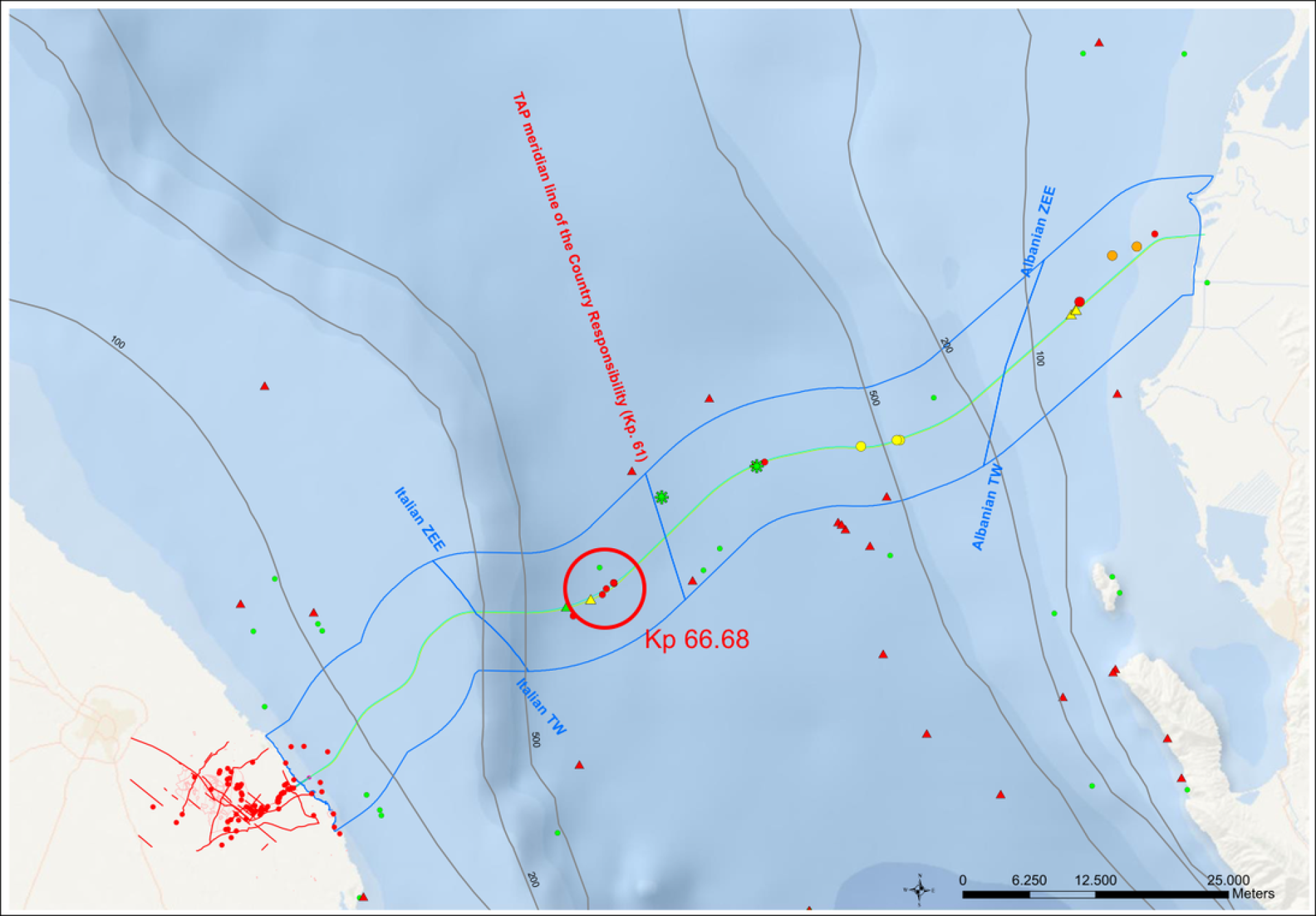
In 2018, during regular subsea survey activities along the 105km offshore corridor, the TAP teams identified ceramic elements of high archaeological interest, dispersed on the seabed, at a depth of about 780 meters.
TAP presented the findings to the local Superintendency for Cultural Heritage, Fine Arts and Landscape, who agreed to further investigate the site and subsequently proceed with the recovery of some of the archaeological finds.
During the in-depth technical analysis and archaeological investigations that followed, a detailed instrumental survey was carried out, which revealed that the pottery on the seabed (about 241 objects in total) were mostly Corinthian-type A amphorae, in addition to hydriai, pithoi and smaller pottery (cups, trefoil jugs, etc.), dating back to the period between the 7th and 6th centuries BC.
In line with the approach agreed with the local Superintendency, TAP has implemented continuous archaeological monitoring during the pipe-laying activities in 2020. This allowed the teams to evaluate actions in advance and avoid any potential interference with the archaeological site, including a so-called stop-work protocol.
Seasoned archaeologists supervised the pre-laying visual inspection and monitored the pipeline touch-down in real-time with the help of a remotely operated vehicle, while the “guided-laying”’ procedure was adhered to, which ensured that the pipeline was installed within its corridor (+/-5 meters). This approach allowed the pipeline installation along the planned route, previously cleared for any archaeological finds with a maximum degree of precision (+/-60cm from the central line).