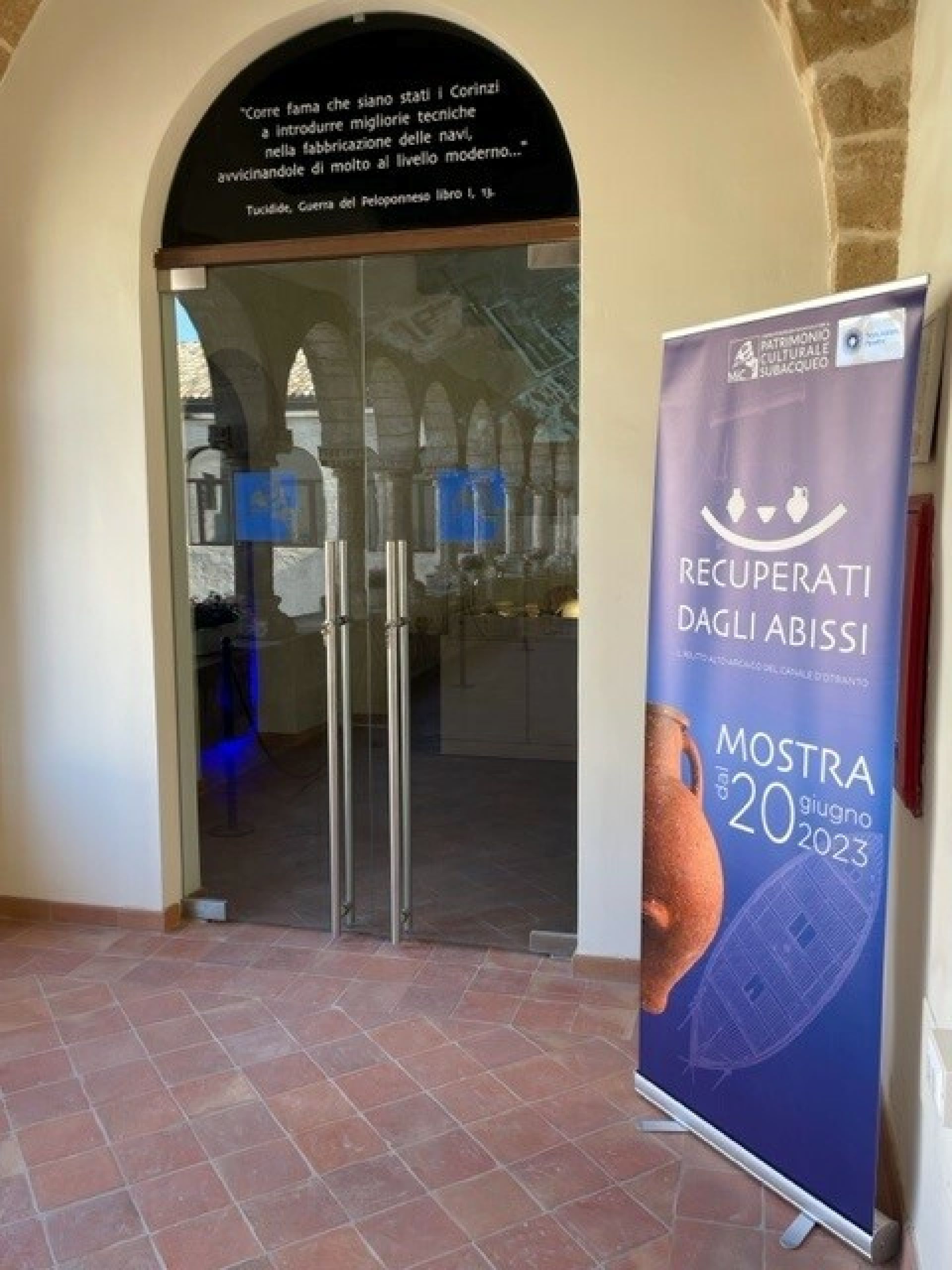
The ‘Recovered from the abyss’ exhibition opens its doors to tell a 2,600 years-old story

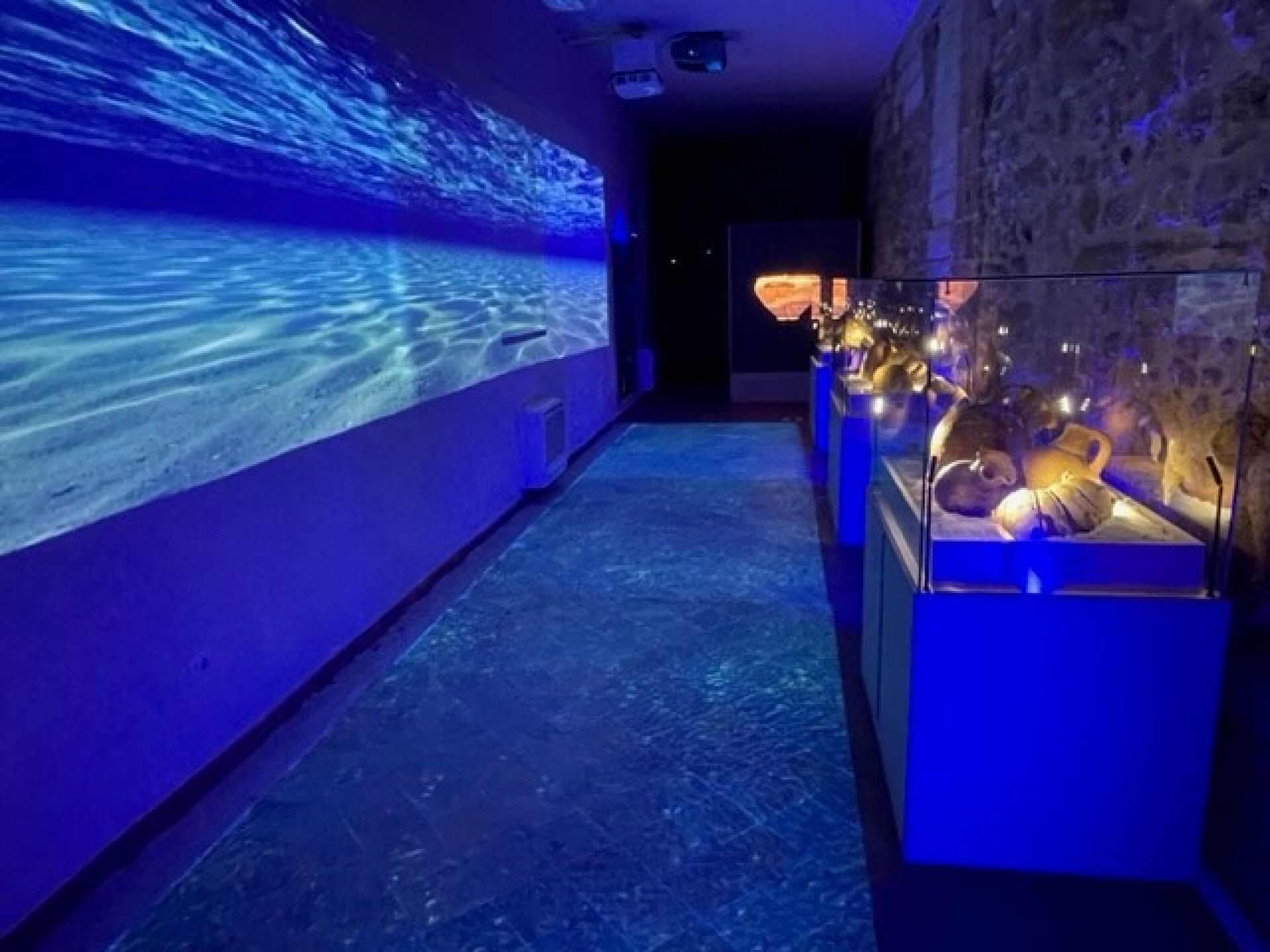
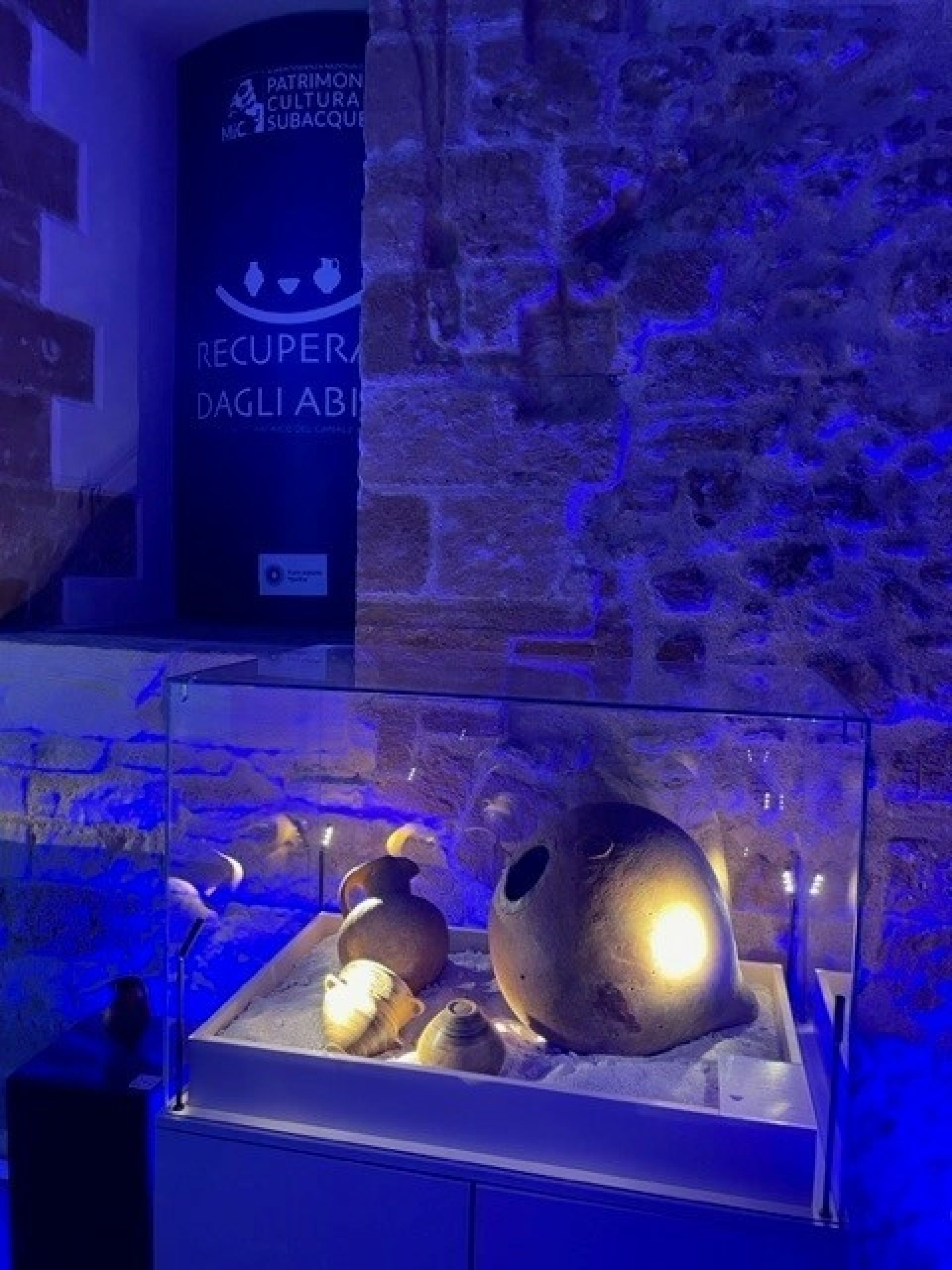
On 21 June, an exhibition titled "Recovered from the abyss", made possible thanks to TAP’s support, has opened its doors to the public at the headquarters of the National Superintendency for Underwater Cultural Heritage of Taranto.
The multimedia-enabled exhibition displays the findings of part of an an ancient wreck the load found in 2018 on the seabed of the Otranto canal at a depth of 780 meters during underwater investigations and pipelaying activities.
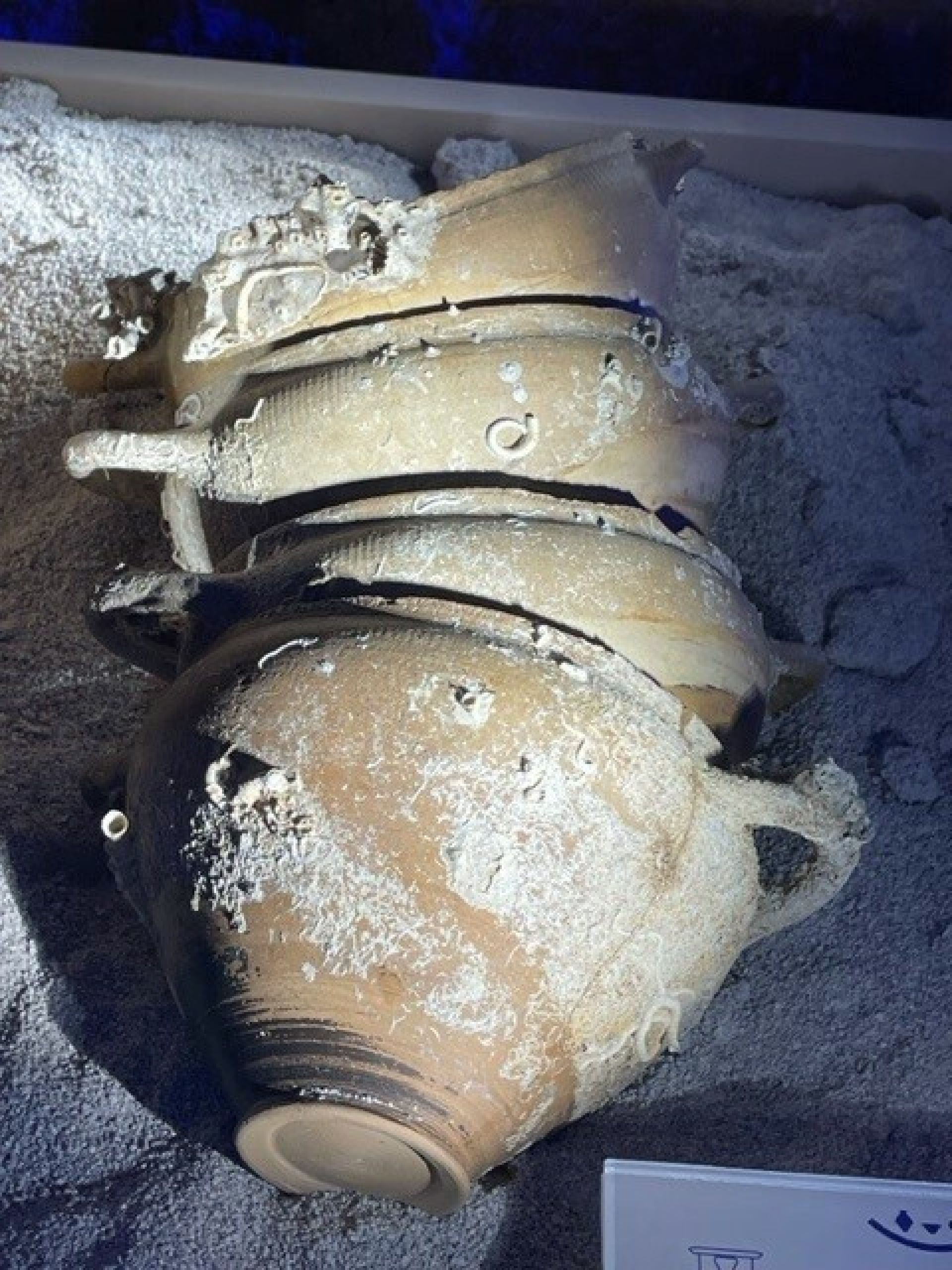
The 2,600-year-old objects were rescued by TAP teams using state-of-the-art remotely operated equipment and subsequently restored by the archaeologists of the Superintendency.
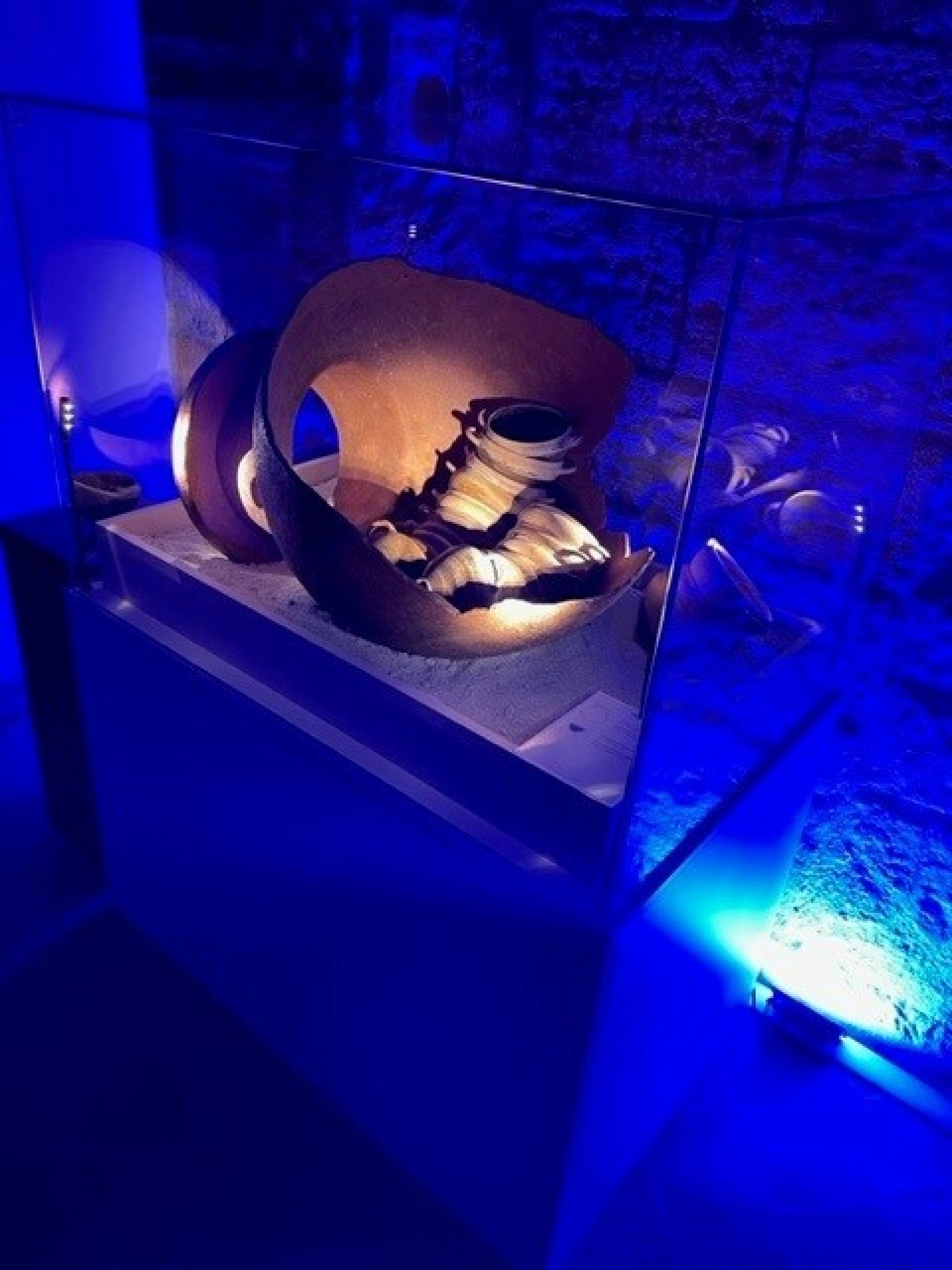
The artefacts, dating back to 7th century BC, are of undisputed archaeological interest, as they shed light on the trade route between the two shores of the Adriatic at the dawn of the Greek colonial period. Several ancient jars, such as amphorae, hydriai and pythioi, a set of cups and olive seeds are now restored and displayed at the exhibition.
The ancient treasures are now displayed in an immersive-type manner, utilizing multimedia to make visitors feel like they are “diving into the abyss”, just like the divers who recovered them.
'We are proud that thanks to our support, the Greek shipwreck symbolically ‘resumed a journey’ that was dramatically interrupted over 2,600 years ago. This is another testament of our commitment to respecting the environment and the cultural heritage across our route', said Luca Schieppati, TAP Managing Director.
TAP crosses countries rich in history and traditions. More than 600 experts, including archaeologists and subject matter experts monitored TAP’s construction sites in Greece, Albania and Italy during the various phases of the project to safeguard the great cultural and historical heritage of the three host countries.
During offshore activities, the Superintendency monitored the inspection of the seabed before the pipe-laying activities and the location in real time using a remotely-controlled vehicle following the so-called ‘guided launch’ procedure to ensure that the pipeline was being installed with utmost precision along the planned route.